
Projects
1- Design of Smart Systems for Industrial and Aerospace Applications
1.1 Development of Modular Robotics Design.
Project Objectives
The main objective of the present project is to develop modular robotics design to improve tasks versatility, improve productivity, and cost effectiveness.
Quality Function Deployment (QFD)
QFD is a planning and problem-solving tool for translating customer requirements into the engineering characteristics of the new design.

QFD for a Modular Robot for Industrial Applications
Three classes of requirements are identified: Functions; Ergonomics; Constraints (size and cost)
The most important engineering characteristics are shown are Ability to perform versatility of tasks, range of motion, and simplified user Controls.
Selection of Design Concept
The chosen concept for the developed modular robot is two-arm robot moving on tracks. This concept is based on Johnny 5 Robot commercially available robot developed and sold by LynxMotion, Inc. The robot’s design consists of generic parts designed for repetitive use in a variety of applications within the robot assembly. A majority of the parts are laser-cut sheet metal parts. They provide high strength but their fabrication and assembly are not easy and expensive. The initial concept is displayed below.

Initial Design Concept
The chosen concept went through analysis and modification using addituve manufacturing by Fusion Deposition Modeling (FDM) of thermo plastic material for all general parts. Design for additive manufacturing and assemplyof the new design were applied. A new and efficient control system using commercially available components is configured and displayed in the below figure.

The developed control system for the new robot
Prototype and Evaluation of the new Design
A prototype of the new design is produced, tested, and compared with the initial concept.

Final Design of new Modular Robotic
As result of effectively applying design for assembly aided by additive manufacturing approach the followings are the benefits:
Total Number of Parts: 17 instead of 90.
Total Assembly Time is reduced by 80%.
Cost is reduces by 60% compared with the initial concept.
1.2 Development of Unmanned Quadcopter Arial Vehicle
Design Problem Statement
This project was set to research and design a structure and control system for an unmanned aerial vehicle so that that the body is stronger and can possibly have more flight time than some of the helicopters seen in today’s market. It may be used in military, private and public sectors with a range of applications such as but not limited to surveillance, reconnaissance missions, and border patrol and law enforcement.

Quality Function Deployment (QFD)
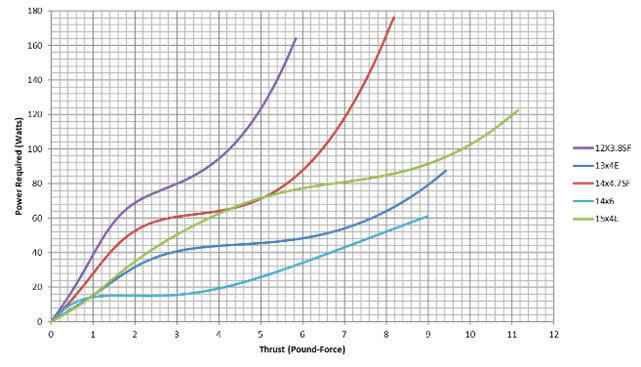
Propeller comparison
Initial Design

Design for Assembly –Initial Design

Total Weight: 2.51 lbs
- Number of Parts: 112
- Theoretical Assembly time: 30 minutes
- Actual Assembly time: 480 minutes.
- Design efficiency index:
- 𝜼=𝟑 𝒙 𝑵_𝒎𝒊𝒏/𝒕_𝒎𝒂 = 4.60%
Improved Design
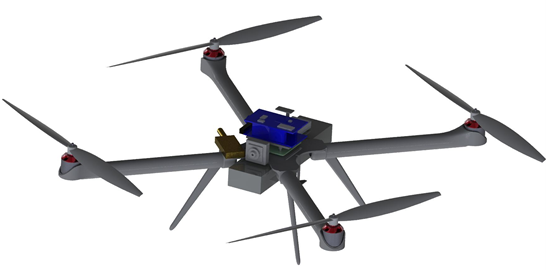
Total Weight: 0.51 lbs
Design for Assembly Analysis of Improved Design

- Number of Parts: 27
- Theoretical Assembly time: 5 minutes
- Actual Assembly time: 20 minutes
- Design efficiency index:
- 𝜼=𝟑 𝒙 𝑵_𝒎𝒊𝒏/𝒕_𝒎𝒂 = 17.1%
Recommendation for Further Improvement
- Better/adequate landing gear.
- Carbon-fiber rods for arms (hybrid manufacturing).
- Electronics compartments.
- Sonar sensor for obstacles.
- More control testing and better maneuverability.
- Scale up design for different applications.
2- Development of Smart Medical Devices
2.1 Realization of Quality Locked Plating Systems Design for Treating And Stabilizing Femoral Fractures
Locked plating systems have emerged in recent years as effective devices for treating and stabilizing femoral fractures. Nevertheless, clinical failures due to plate yielding and fracture have been observed – particularly with distal femoral plates. The majority of failures are attributed to improper placement, fixation techniques, or plate selection, and to premature weight bearing by the patient. While the mechanical function of plating systems is well-understood, the optimum design parameters that lead to efficient stability and fracture healing, such as plate geometry, material properties, and fixation techniques (screw configuration and the use of hole inserts), are unknown.


Results and Analysis (Optimum Design)


Conclusions of the Project
1. The developed CAE approach for locked plating systems design provides understanding of the contribution of design parameters on the biomechanics and reliability of LCP systems.
2. The integrated system allows for exploring the optimum conditions for robust LCP design.
2.2 Development of Embolic Protection Device to Aid in Trans-catheter Aortic-valve Implantation and Prevent Neurological Dysfunction.


Developers
Ahmed Sherif El-Gizawy, PhD, PE (ITECH D&M, LLC),
And
Raja Gopaldas, MD, FACS (School of Medicine, University of Missouri)
Medical Needs for the Embolisher
- Aortic Stenosis
- Progressive narrowing of aortic valve
- Most common valve problem
- Most often requires open heart surgery
Transcatheter aortic valve implantation (TAVI) offers a minimally invasive alternative to the open heart AVR and is performed without the chest being opened or the need of a heart lung machine. However, TAVI has been reported to have an intra-operative stroke rate as high as 22%, which is five times higher than AVR. This constitutes a critical barrier that prevents the adoption of TAVI as a standard of care. Hence TAVI is currently reserved only for high-risk patients who would not tolerate AVR. As a part of the present project, the Embolisher is being developed as embolic deflector that prevents embolic debris from entering the brain vessels, and thus preventing any neurological dysfunction such as stroke. The device will be introduced temporarily into the aortic arch before commencement of TAVI and removed at the end of the procedure. The device is introduced via trans-femoral route, similar to a TAVI, and remains completely detached from the outside environment during operation. Once TAVI is complete, The Embolisher is retrieved by means of a novel retrieval mechanism, which is also part of the present innovation.

Deployment of the Embolisher
3- Manufacturing Process Improvements
The goal of Manufacturing Processes Improvement is utilizing experimental, analytical and artificial intelligent techniques in order to gain fundamental understanding of the manufacturing process design with the objective of optimizing existing processes and to accelerate the development of new ones. Our investigation approach involves Characterization and Management of Process-induced Properties.
3.1 Drilling Process Design for Hybrid Structures of Polymer Composites over Titanium Alloy for Aerospace Applications.
This work aimed at determination of optimum drilling process design for hybrid structures of polymer composites over titanium alloy in order to reach the needed quality and cost effectiveness for the aerospace industry. A set of experiments are designed to investigate the effects of process variables on the required torques and thrust forces and quality of the drilled holes. Surface response methodology is used to analyze the results. Process maps are introduced based on the experimental results and the optimum conditions for producing quality holes

Schematic of Developed Smart Drilling System for Automated Production
Published Article, Journal of Material Science & Engineering
http://dx.doi.org/10.4172/2169-0022.1000243
3.2 An Integrated Modeling Approach for Management of Process-Induced Properties in Friction Stir Welding Processes.
Numerical and physical modeling techniques are used to predict process behavior in friction stir welding (FSW) high strength aluminum alloys. The numerical approach uses a non-linear finite element method to characterize thermal and deformation behavior along the welded structure during FSW. The physical modeling approach uses the response surface methodology (RSM) to evaluate the effects of the process controlling parameters on the properties of the welded joints.

Published Article, Journal of Applied Mechanical Engineering
http://dx.doi.org/10.4172/2168-9873.1000196
4- Technology Transfer
Our goal is to develop technical capabilities to fulfill principal objectives and to meet greater challenges in the future. This goal is multifaceted: introducing design and manufacturing innovations; ensuring product quality; and effectively and efficiently managing manufacturing operations so that quality products are delivered in a timely fashion without harmful impact on our environment. I Tech D&M will support and maintain an active outreach program aimed at bringing lifelong education and research applications to Manufacturing industries. The delivery mechanisms for assistance from I Tech D&M include both general and customized workshops, certificate programs and seminars. At I Tech D&M, we feel that technology transfer is an extremely important issue for improving U.S. manufacturing competitiveness by making our partner industries aware of the new manufacturing technologies, and the advanced methods for product, process, and tooling design. The process of assistance delivery also provides hands-on experience in problem solving methods through customized training programs.
Certificates Program offered by I Tech D&M in 2025 focusing on Digital Design and Manufacturing Innovation.
Professional Certificate 1- Quality by Design (QBD) for Engineering Industry.
Professional Certificate 2- Design for Assembly Aided by Additive Manufacturing (DFA-AM)